











Take Control of Your Business Finances in Just 5 Days – WITHOUT an Accounting Degree!
Join our FREE 5-day course and learn how to manage your bookkeeping, track expenses, and prepare for tax season so you can focus on growing your business with confidence!
What You’ll Learn in This Course:
💰 Day 1: Small Business Accounting Basics – Get your books in order and understand key accounting terms.
📊 Day 2: Setting Up Your Chart of Accounts – Organize your finances the right way.
📝 Day 3: Bookkeeping Made Easy – Track income, expenses, and reconcile transactions like a pro.
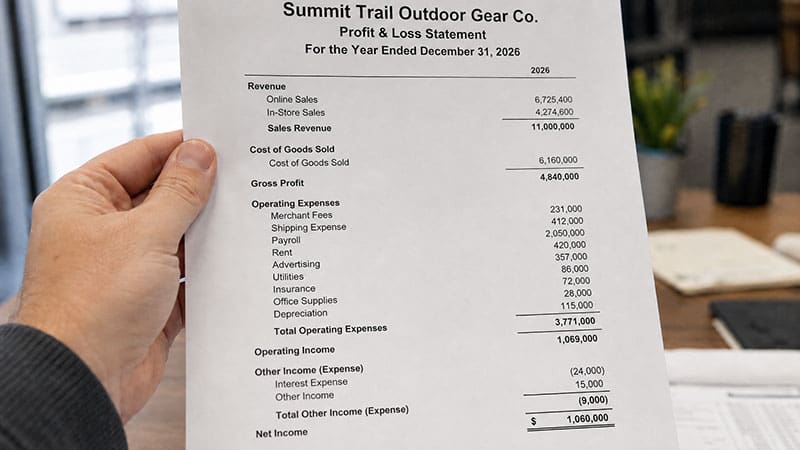
📈 Day 4: Understanding Financial Reports – Learn how to read and use Profit & Loss Statements, Balance Sheets, and Cash Flow Statements.
🛡️ Day 5: Advanced Accounting & Tax Prep – Discover tax-saving strategies and when to hire a pro.
Why Sign Up?
✔️ No more financial stress – Understand where your money is going.
✔️ Save time & money – Get simple, actionable accounting tips you can apply immediately.
✔️ Stay tax-ready – Learn how to track deductions and avoid tax-time headaches.
✔️ Designed for small business owners – No complicated accounting jargon, just easy-to-follow steps.
Who is This For?
✅ Small business owners who manage their own bookkeeping
✅ Freelancers & solopreneurs who want better financial control
✅ Entrepreneurs who want to avoid costly accounting mistakes
✅ Anyone who feels overwhelmed by accounting & taxes
Sign Up Now – It’s 100% Free!
Why You Should Take a Free Small Business Accounting Course
Most business owners do not start a company because they enjoy working in spreadsheets, and most business owners discover the accounting requirement only after the company is already operating. A business owner who runs a local coffee shop is required to understand the numbers that the coffee shop produces, and a business owner who runs an online retail brand is required to understand the numbers that the online retail brand produces, and neither requirement disappears because the subject is unfamiliar to the business owner. A free small business accounting course is intended to remove the complexity that prevents a business owner from learning this material, and a free small business accounting course of this kind is intended to be completed by a business owner who has no prior accounting training whatsoever. The alternative to learning the material is either entering tax season without a clear record of the year that has just ended or paying a bookkeeper to perform routine tasks that the business owner is entirely capable of performing without assistance.
This course is designed for people who have never received formal accounting training of any kind, which means that an accounting degree is not required in order to complete this course and memorization of the debit and credit rules is not required in order to complete this course either. What is required is practical instruction that reduces the amount of time the business owner spends on bookkeeping, that reduces the number of errors entered into the accounting records, and that keeps the business profitable over the course of the year, and practical instruction of exactly that kind is what this course was built to provide.
What You’ll Learn in This Free Accounting Course for Small Business Owners
The training series covers the essential principles of small business accounting across a small number of individual lessons, and each lesson in the training series is short enough to be completed in one sitting by a business owner who has a full schedule. Each lesson in the training series is focused on a single topic rather than several topics, and each lesson in the training series uses examples that are drawn from situations a small business actually encounters rather than examples drawn from a textbook.
The lessons in the training series cover the following material in the following order. Income and expenses are tracked using the method that an accountant would use rather than the informal method that a blank spreadsheet tends to encourage. A chart of accounts is constructed from the beginning of the process, and the chart of accounts is organized in a way that means later reporting will not require the chart of accounts to be taken apart and rebuilt. The primary financial statements that a small business produces are read and interpreted by the business owner rather than filed away and forgotten by the business owner. Common tax errors and common compliance errors are identified by the business owner before those errors have been entered into the accounting records and become expensive to correct. Routine bookkeeping tasks that consume time every month are automated through accounting software. The information that the accounting system produces is then used by the business owner to support the decisions that the business owner has to make about the business.
Each module in the training series builds on the module that came before it in the training series. A person who has never opened a balance sheet in the course of running a business is still able to follow the sequence from the first lesson through the last lesson, and a person who has never opened a balance sheet is still able to apply the material from each lesson to the business immediately after that lesson has been completed.

Ideal for Entrepreneurs, Freelancers, and Non-Financial Founders
This training series is built for people who perform several different roles inside the same business at the same time. A business owner who handles the marketing for the business, who also handles customer service for the business, and who also handles the finances for the business, is the specific person this training series was written for. The training series is intended to remove the feeling of being overwhelmed that tends to occur when a business owner of that description logs into a business bank account or opens an invoice that has not been paid.
The same accounting rules apply to a solo freelance business with no employees at all. Those same accounting rules also apply to a business that employs a team of ten people. The difference between the solo freelance business and the business with ten employees is the volume of transactions that each business processes in a month, and the difference is not the rules that govern how those transactions are recorded. This training shows how the accounting rules are applied to one specific operation, and this training does so without relying on jargon that the business owner has not encountered before.

5 Reasons Why You Should Take This Accounting Course
A bookkeeper or an accountant costs a small business somewhere between several hundred and several thousand dollars over the course of a year. Professional assistance from a bookkeeper or an accountant is important during tax filing season and professional assistance is important during an audit as well. Many of the daily financial tasks that a bookkeeper performs on behalf of a small business can be handled inside that business by the business owner, provided that the business owner understands the principles that sit underneath those daily tasks.
This course establishes which financial tasks are appropriate for the business owner to handle inside the business and which financial tasks are appropriate for the business owner to send to a professional instead. That distinction reduces the amount that the business pays in bookkeeping fees over the course of a year, and that same distinction also reduces the penalties that result from filings that are submitted late or filings that are submitted with incorrect figures.
1. Learn to Use Your Financial Reports, Not Just File Them
A common pattern among small business owners is to collect receipts throughout the year, categorize the expenses that those receipts represent, send the categorized expenses to a tax preparer at the end of the year, and then never look at the resulting statements again. That pattern satisfies the filing requirement that the business is subject to and that pattern satisfies nothing else beyond the filing requirement. Accounting records are capable of supporting business decisions throughout the entire year, and accounting records support those business decisions only in the case where the records are actually read by somebody.
This course covers the way a profit and loss statement is read by a business owner, the information that a balance sheet reports about a business, and the specific figures on either statement that indicate a problem is developing inside the business. The course also covers the way that cash flow is assessed from the accounting records, so that a period of weak cash flow is identified by the business owner while the business still has enough time available to respond to that period of weak cash flow.
2. Designed for Busy Schedules: Learn at Your Own Pace
The course does not require a full week of working time to be set aside in advance and the course does not require attendance at a live session that has been scheduled for a fixed date. The lessons in the course are delivered in short segments, and a segment of that length can be completed between two meetings, during a break in the working day, or at the start of the day before the business opens.
Each video in the course and each worksheet in the course is designed to be completed in less than thirty minutes by a business owner working alone. The format accommodates a business owner who completes several of the lessons in a single sitting over a weekend, and the format equally accommodates a business owner who completes one lesson on each of five consecutive days.
3. Includes Downloadable Templates and Real-Life Scenarios
Many free accounting courses explain an accounting principle and then leave the application of that accounting principle entirely to the person who is taking the course. This course includes the practical tools that are required in order to apply each principle to a real business. The tools that are included consist of editable spreadsheets, printable checklists, and worked examples that have been taken from situations small businesses actually encounter during a normal year.
The worked examples cover the tracking of payments received from clients and the configuration of automatic expense categories, among a number of other routine tasks that a small business has to perform. The purpose of the worked examples is to demonstrate the way an accounting system is structured at the outset, so that the structure of that accounting system does not have to be worked out afterward through trial and error.
4. Learn How to Choose and Use Accounting Software Effectively
Selecting accounting software is a frequent source of frustration for business owners who have not selected accounting software before. Dozens of accounting platforms exist in the market, and each of those accounting platforms has its own pricing structure, its own terminology for the same underlying concepts, and its own learning curve for a new user. This course covers which software features actually affect the daily work of a small business, the way that competing platforms are compared against one another, and the way that an unnecessary level of software spending is avoided by a business owner.
The course also shows accounting software being operated rather than merely described, which demonstrates the way automation is configured inside a platform, the way a business bank account is connected to the accounting system, and the way a useful report is generated from the data that the connection produces.
A business owner who has already selected a platform such as QuickBooks, FreshBooks, Wave, or GlassJar will still find this material useful, because the material addresses the way any platform is used by a small business rather than addressing the question of which platform that small business ought to have selected.
5. Build Confidence With Tax Basics Every Owner Should Know
Taxes are the part of small business accounting that business owners most often avoid for the longest period of time. This course addresses that avoidance directly by covering the basic principles that determine what income is taxed, the rate at which the tax is applied to that income, and the point in the year at which the tax becomes due and payable.
The course covers the difference between income tax and self-employment tax, the mechanics by which estimated payments are calculated and submitted, and the deductions that are safe for a small business to claim. Working with a certified public accountant during filing season remains the recommendation regardless of how much the business owner has learned. The purpose of this material is to provide the business owner with the vocabulary that is required in order to have a productive conversation with that tax professional.
No Catch, No Upsells. Just Practical Training That Works
Many platforms advertise a free accounting course and then use that free accounting course as the entry point to a paid subscription, a paid membership, or a paid consultation with a member of their staff. This training does not operate in that manner at any stage. The training is genuinely free of charge and every lesson in the training is available from the first day onward.
This training was created in order to help small businesses succeed over a longer period. The material is applicable to a business that has only just started trading and the material is equally applicable to a business that is correcting a period of poor record keeping that has already occurred. The knowledge is retained permanently by the person who completes the course.

Hear What Other Entrepreneurs Are Saying
Business owners from dozens of industries have already completed this course. Some run home-based Etsy shops. Others run multi-location service businesses. Across the board, feedback has been overwhelmingly positive.
One user shared how they finally understood how their business made money after completing Lesson 3. Another said they switched from messy spreadsheets to clean software workflows that saved them hours every month. These are the kinds of outcomes this course was designed to create.
Start Learning Accounting Without the Overwhelm
A business owner who has been avoiding the accounting work because the accounting work appears complicated, or because the accounting work appears tedious, or because the accounting work appears too technical to attempt without help, is the intended audience for this course. The parts of the accounting work that are complicated are simplified across the lessons, and the parts of the accounting work that are confusing are explained rather than assumed to be already understood. The result of completing the course is an accounting system that supports the goals of the business instead of consuming the working time of the person who is running that business.

You’ll go from reactive bookkeeping to proactive financial management, and from guessing at your numbers to deciding with them. You won’t spend a dime on tuition to get there.
This is one of the most accessible free accounting courses available online, built for business owners rather than for accountants. Start today and take the first step toward understanding your business finances.